


World Kidney Day Celebrations at AIIMS Nagpur
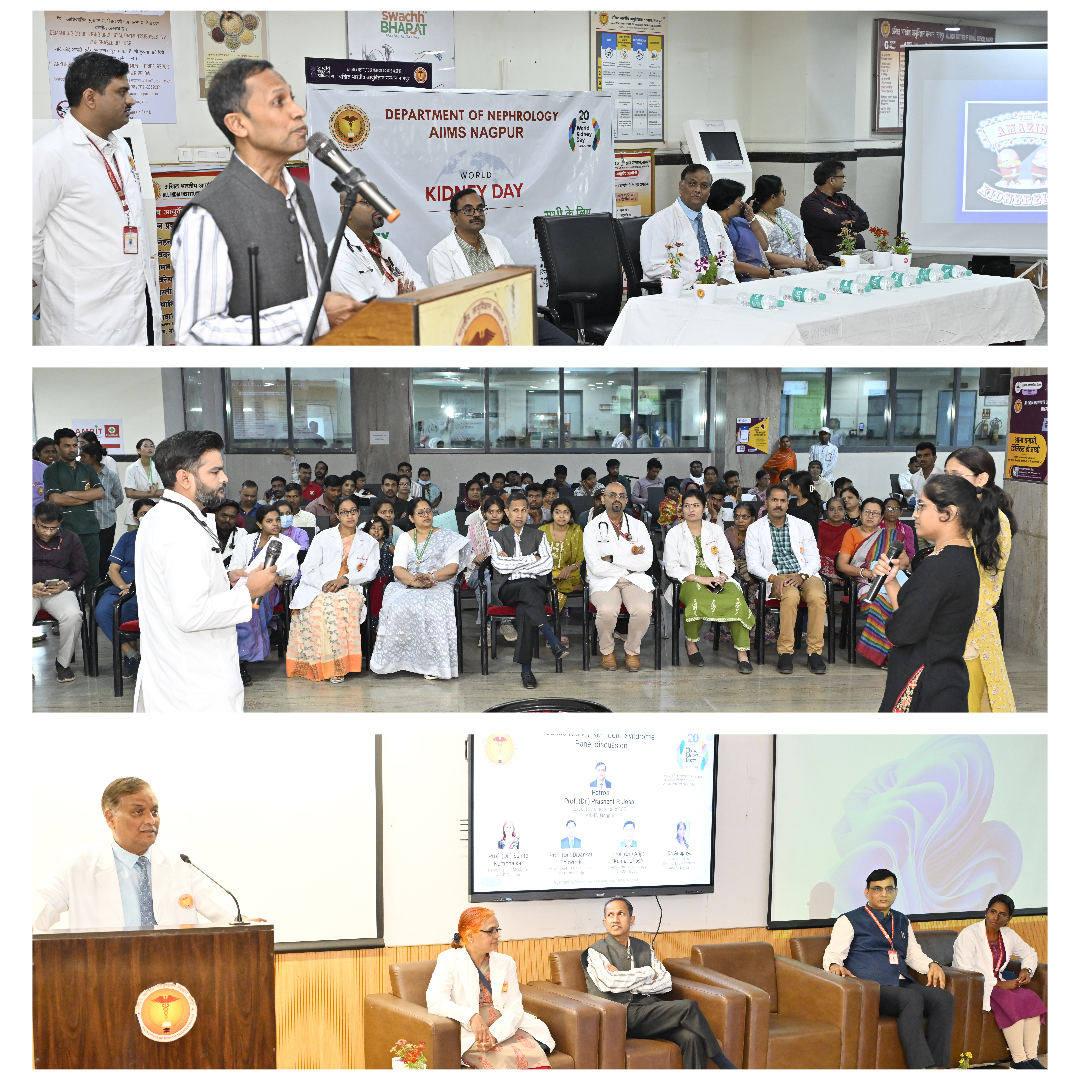
The Department of Nephrology at the All India Institute of Medical Sciences (AIIMS) Nagpur organised a series of awareness and academic activities on March 10, 2026 as a part of the World Kidney Day celebrations to promote kidney health.
The morning session featured a public education programme with Prof. Dr. Prashant P. Joshi, Executive Director and CEO, AIIMS Nagpur, as the Chief Guest and Prof. Dr. Dipankar Bhowmik, Professor and Head, Department of Nephrology, AIIMS New Delhi, as the Guest of Honour. The event was also graced by Dr. Nilesh Nagdeve, Medical Superintendent, AIIMS Nagpur; Dr. Rasika Gadkari, Dean (Academics), AIIMS Nagpur; and Dr. Rajini Peter, Principal, College of Nursing, AIIMS Nagpur.
Dr. Manoj Dhanorkar and Dr. Tanvi Thakker from the department of Nephrology conducted the proceedings. Dr. Anand Chellappan, Associate Professor and In-charge, Department of Nephrology, AIIMS Nagpur, welcomed the gathering.
In his address, Dr. Joshi highlighted the rising incidence of kidney disease and emphasised the importance of public awareness and early detection. Dr. Bhowmik noted that kidney disease is often diagnosed at advanced stages, representing only the “tip of the iceberg,” while a large proportion of patients remain undiagnosed in the community. He also educated the audience about early warning signs and the importance of timely screening.
The session concluded with awareness skits performed by nursing students and nephrology residents, conveying important messages about kidney health in an engaging manner. The vote of thanks was delivered by Dr. Amol Bhawane, Associate Professor, Department of Nephrology, AIIMS Nagpur.
The afternoon session featured an engaging panel discussion on Cardio–Kidney–Metabolic (CKM) Syndrome, moderated by Dr. Anand Chellappan. In his opening remarks, Prof. Prashant P. Joshi drew attention to the rapidly increasing burden of lifestyle-related disorders in India, particularly diabetes and obesity, and underscored the urgent need for preventive strategies.
The panel included Prof. Dipankar Bhowmik, Dr. Sunita Kumbhalkar (Professor and Head, Department of General Medicine, AIIMS Nagpur), Dr. Arijit Kumar Ghosh (Professor and Head, Department of Cardiology, AIIMS Nagpur), and Dr. Anupriya K (Assistant Professor and In-charge, Department of Endocrinology, AIIMS Nagpur).
During the discussion, the experts highlighted that CKM syndrome represents the interconnected relationship between metabolic disorders, kidney disease, and cardiovascular disease. They stressed the importance of recognising these conditions early rather than treating them in isolation.
The panel also noted that recent national data indicate that many Indians carry a high metabolic risk despite having a normal body mass index - a phenomenon often described as the “thin–fat” paradox, where individuals may appear lean but have higher visceral fat and associated metabolic risks.
The experts emphasised that early identification of metabolic risk factors is critical to protecting both the heart and kidneys. They highlighted the need for a multidisciplinary approach involving physicians, nephrologists, cardiologists, and endocrinologists to address the continuum of CKM syndrome.
The discussion concluded with a strong emphasis on prevention through balanced nutrition, choosing nutrient-dense foods over calorie-dense diets, maintaining regular physical activity, and adopting sustained lifestyle modifications alongside appropriate medical therapy.